Phantasmal Cities
Visual
Photographic Report (2024)
My photo portfolio collects photographs taken in the Namib Desert in October 2024. This project is part of my photography collection that represents the culmination of years of studying desert landscapes across the African continent. Much of the work is set in Sperrgebiet, in southwestern Namibia. These photos explore the relationship between the desert and humans and the allure of remote and abandoned places, where silence reigns supreme. The images are arranged as a sequence, each building on the last.
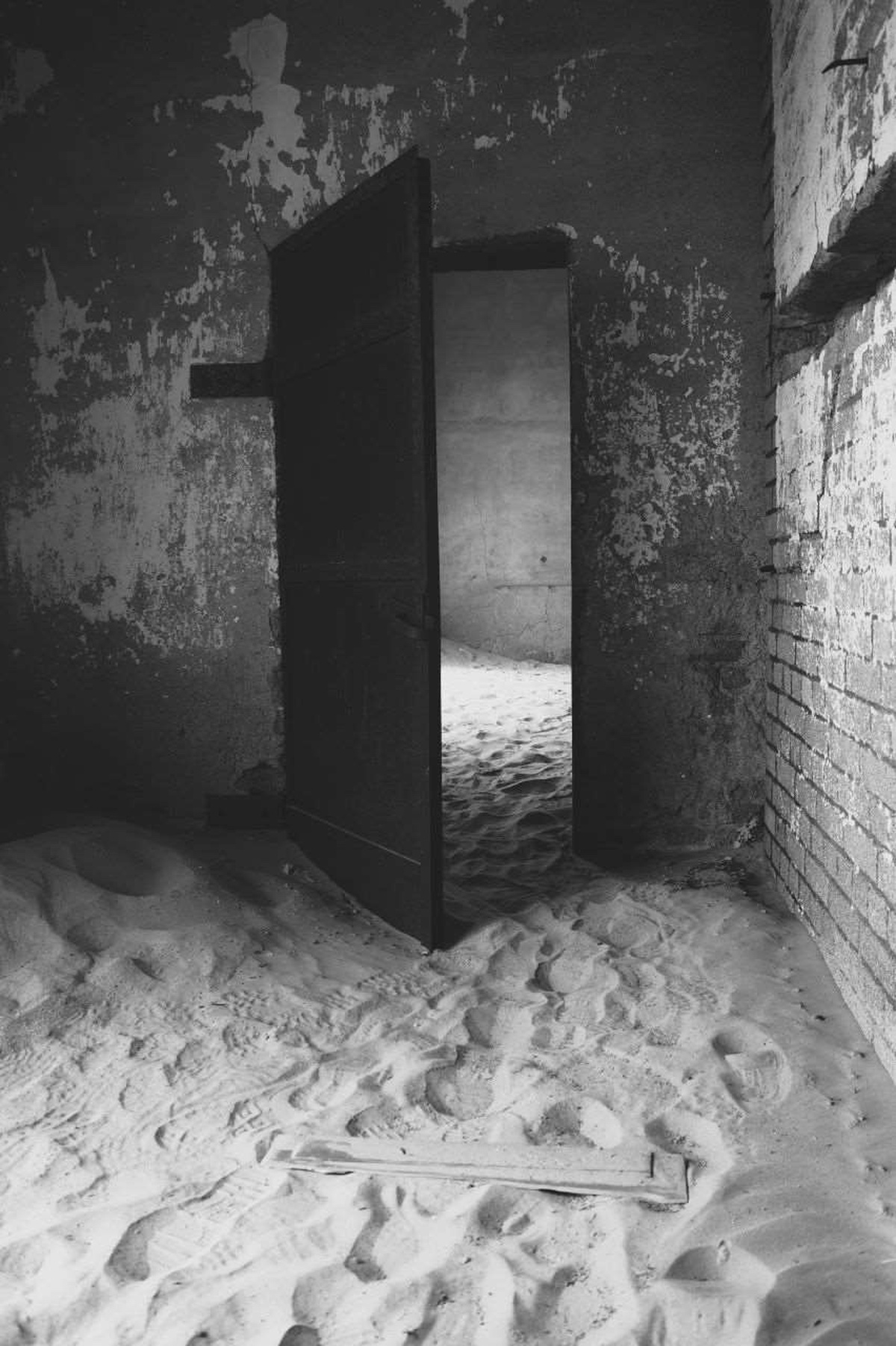
In The threshold, an old rusty door opens onto a sandy setting. The peeling walls tell of the state of abandonment of the ghost town Kolmanskop. On the sand, you can see the footsteps of passersby.
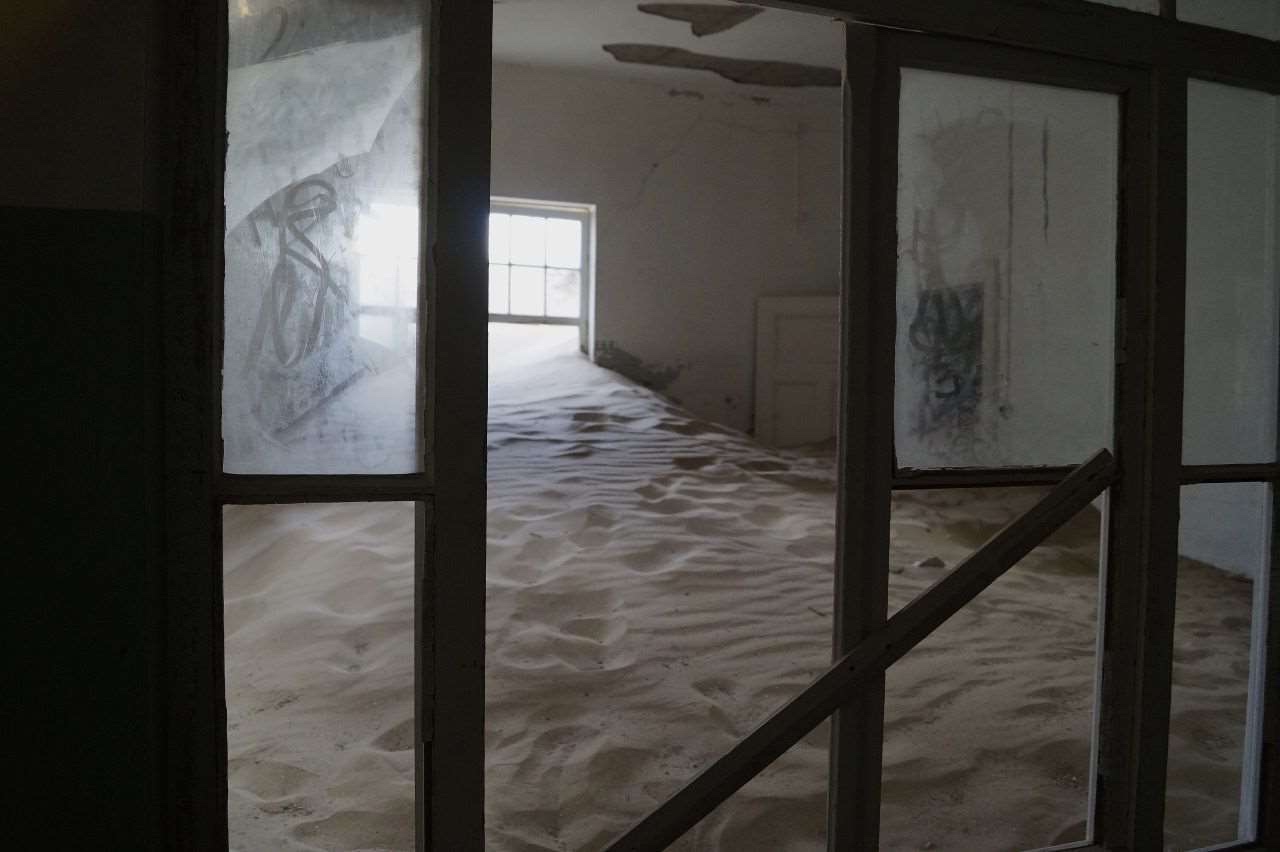
Behind a fogged glass, where you can see the mark left by someone’s fingers, a mountain of sand covers what remains of an old abandoned room. The wooden bar behind the fogged glass creates a boundary between the observer and a space that has become metaphysical behind the Misty panes.
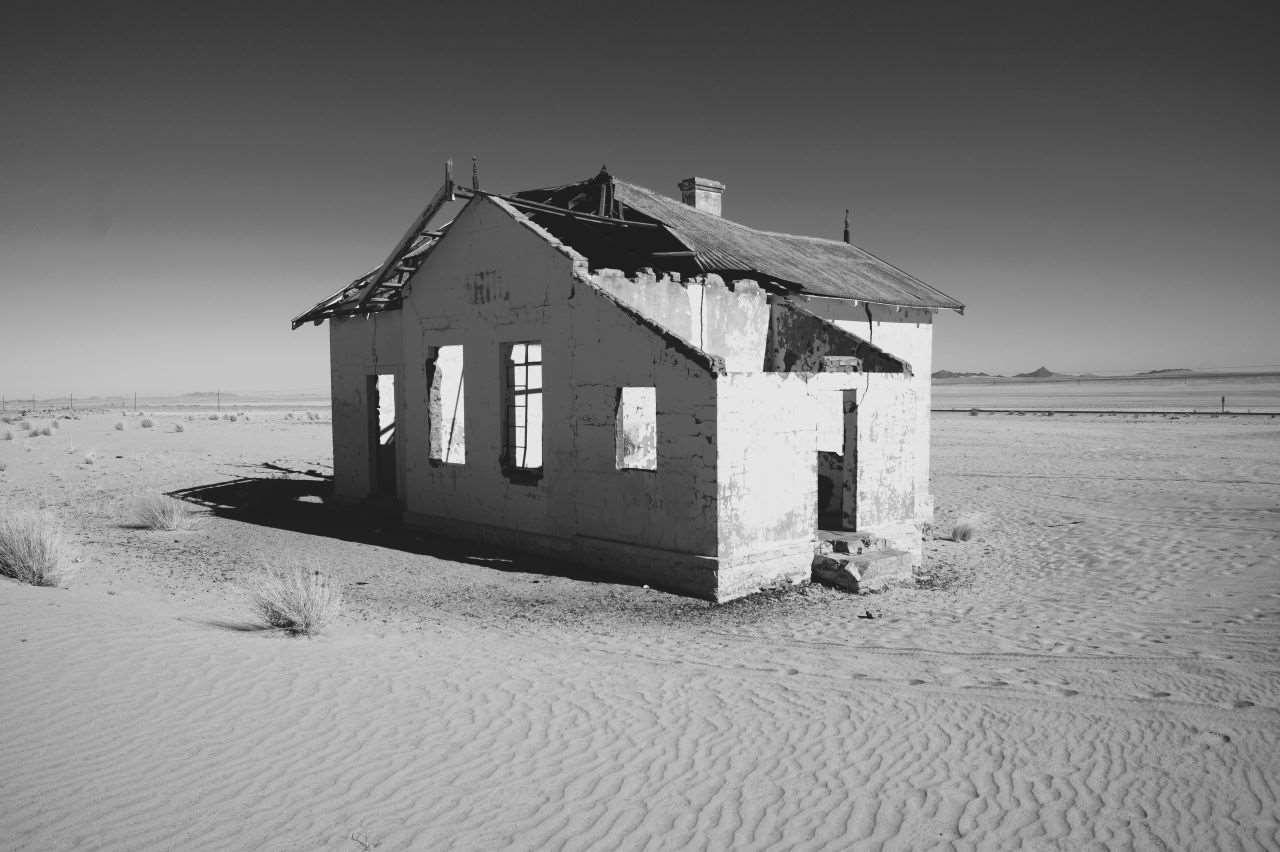
On the wasteland, an old Abandoned house near Garub creates a break in the horizon. The roof, broken by the strong desert winds, provides a glimpse of the structure’s wooden beams. An old, faded inscription can be seen on the facade.
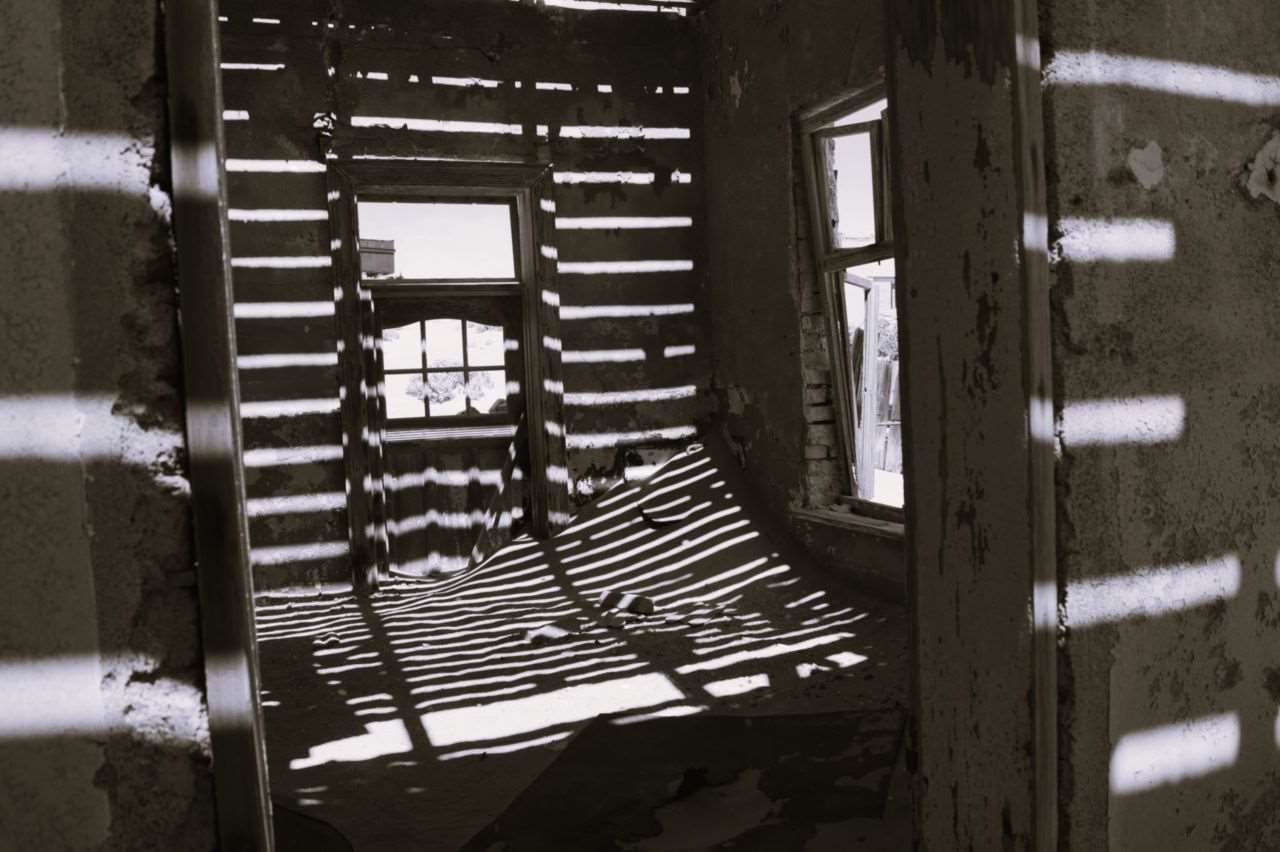
The play of sun rays continues in another old house where Light beams creep through the window.
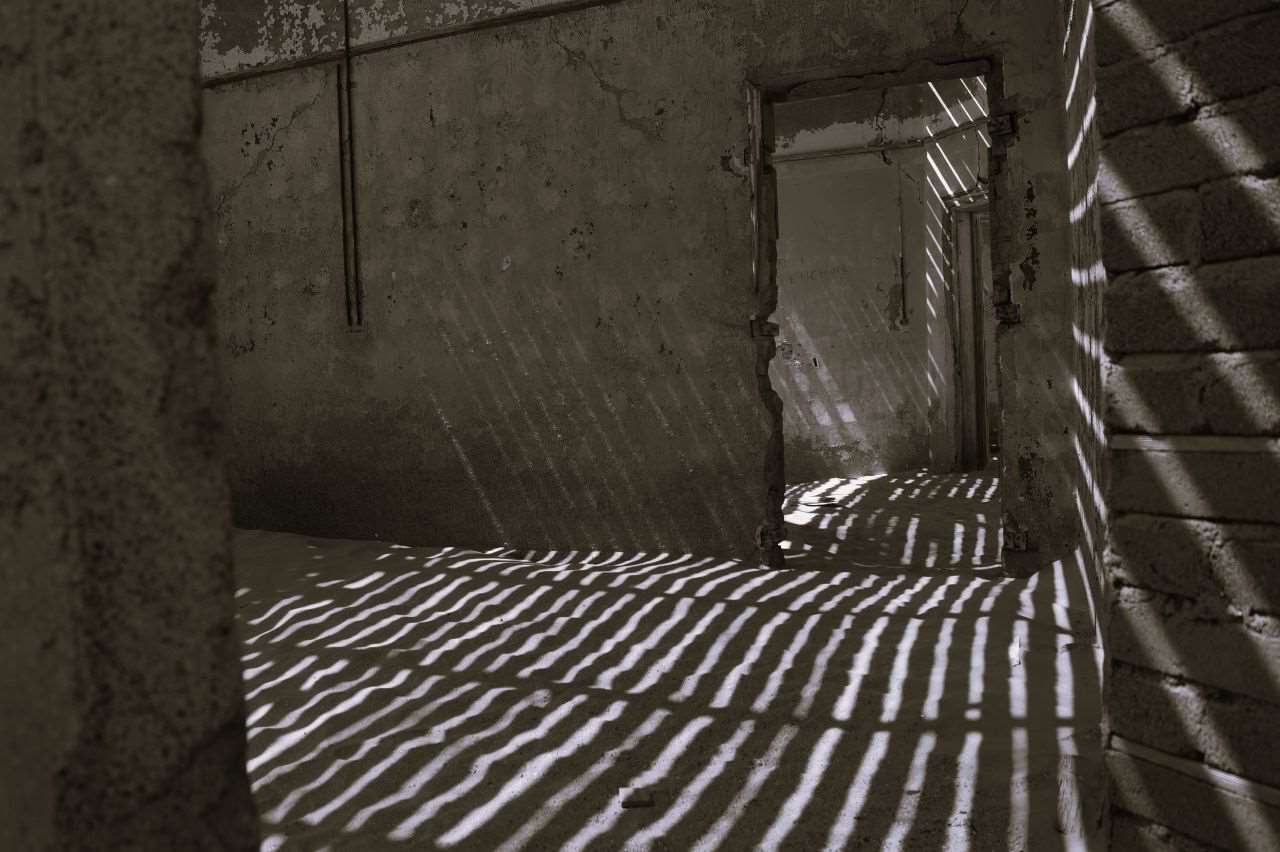
The reflections of the sun branch out through the glimmers of the windows, creating Strips of light on walls and sand in a play of shadow and illumination.
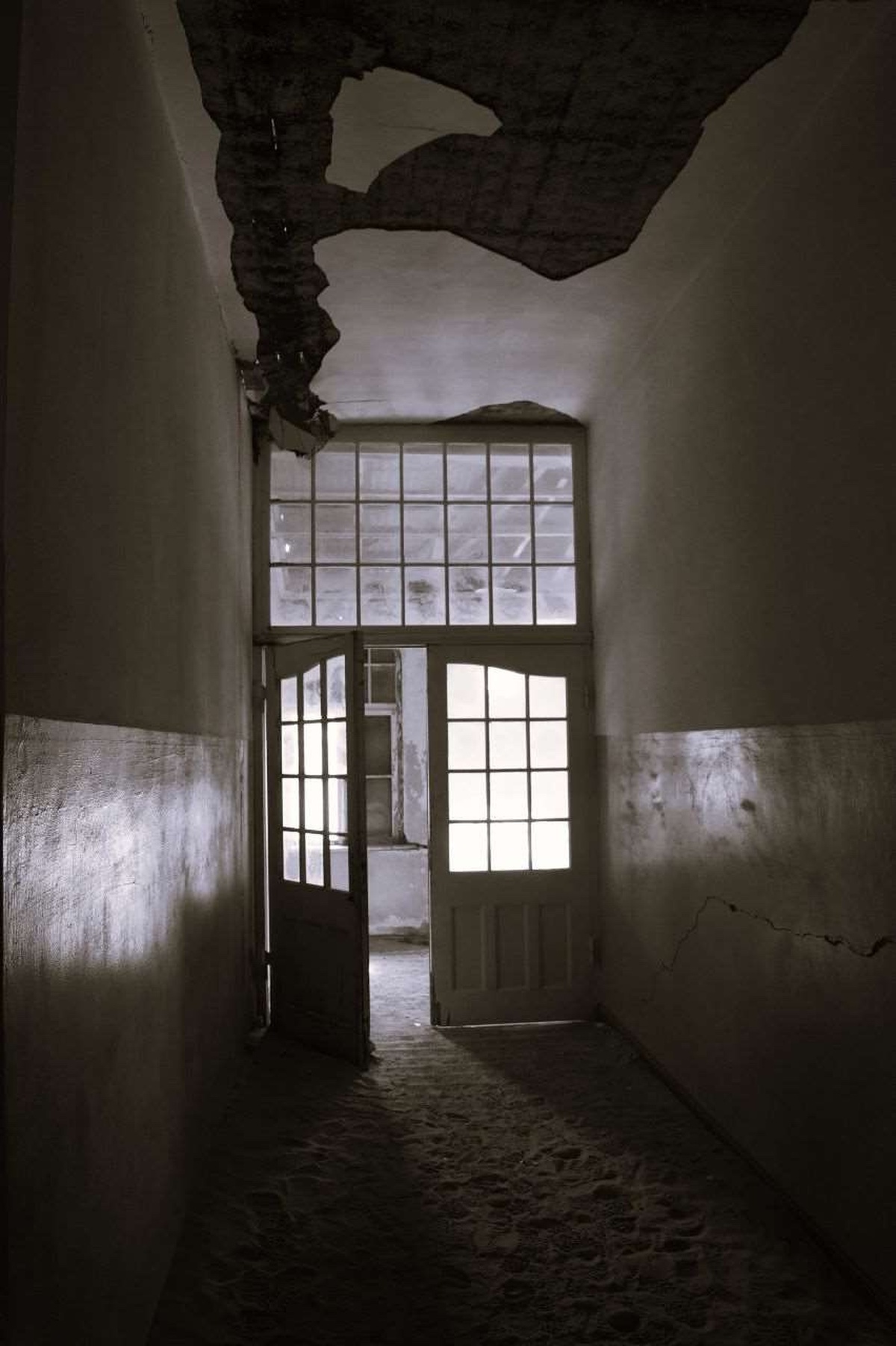
A Dark hallway opens into an illuminated antechamber. Reflections of light gild the walls. Shreds of plaster fall from the roof. Everything is shrouded in an unnerving calm.
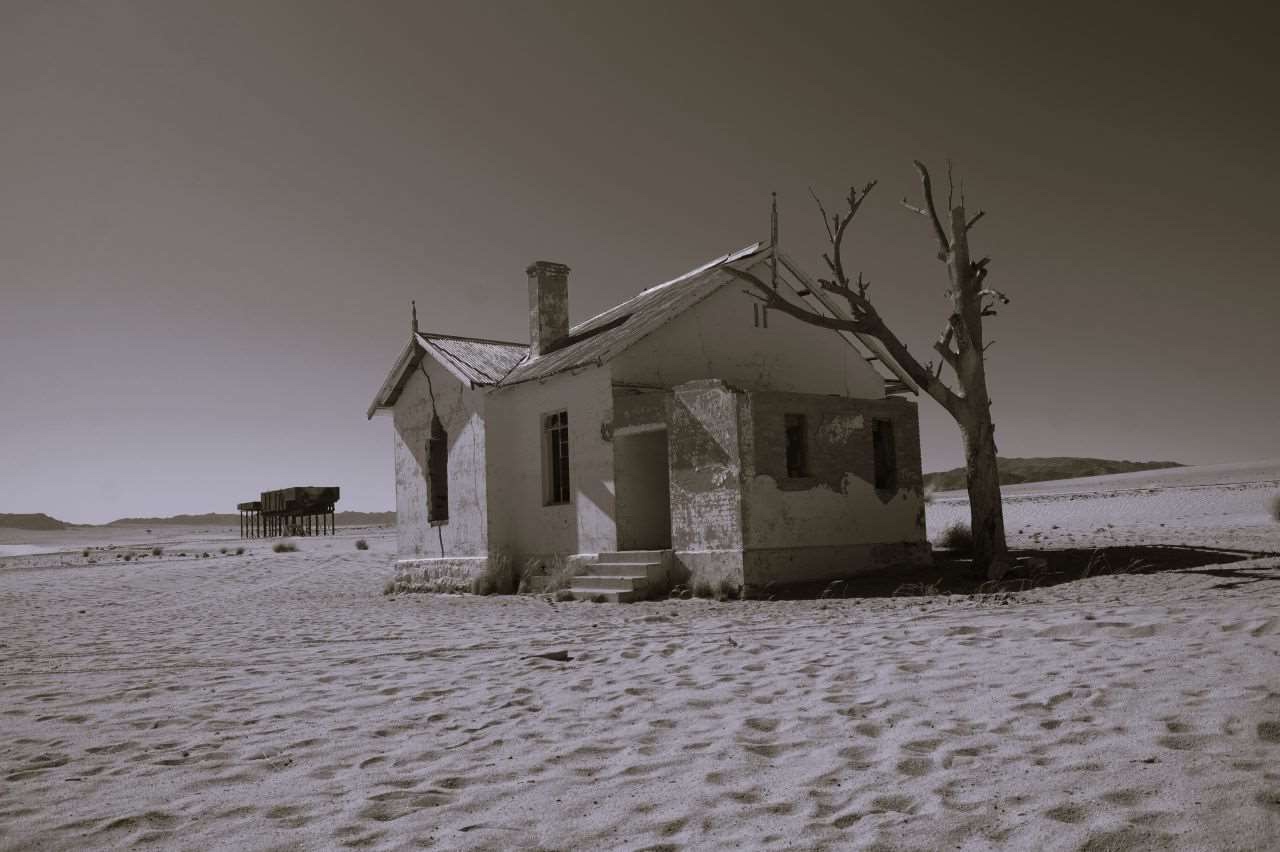
The old Garub Station was once a strategic place because it connected Kolmanskop with the main railway. In the background, you can see a minimalist metal construction, perhaps used for collecting water. According to the theory of the historian Manni Goldbeck, who considers Namib feral horses (today, a species protected by the government) the descendants of South African ancestors, this area is known for being the place where escaped feral horses used by South African soldiers gathered for the first time after the German bombings in the early 1900s. The war between Germans and British/South African forces occurred for territorial reasons: South Africa, as part of the British Empire, invaded German South West Africa to eliminate the German colonial presence in the region.
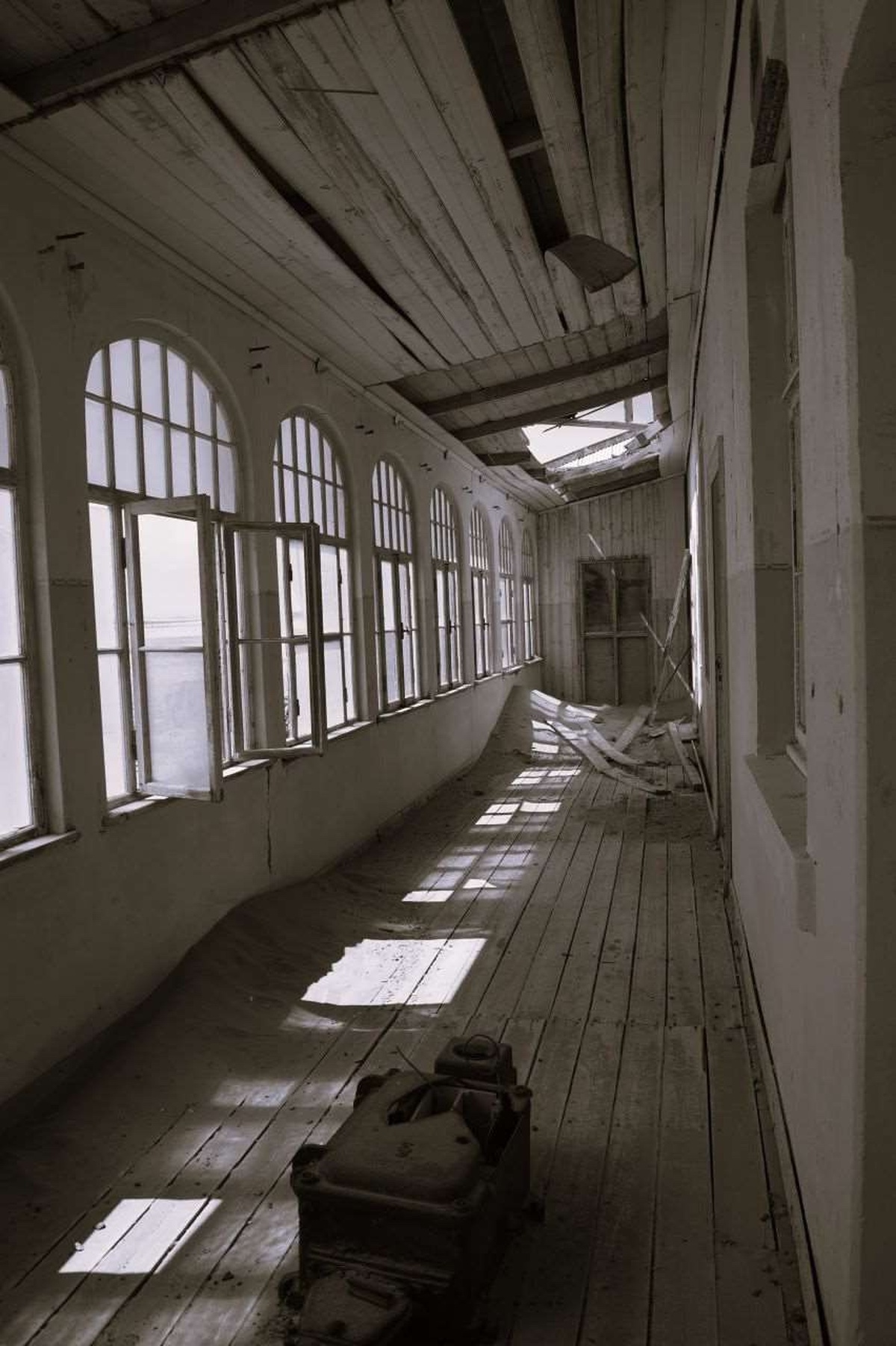
In an illuminated Veranda, from which you can glimpse the desert landscape, lies an old metal wreck. Maybe a wartime device? Or just an old metal scrap?
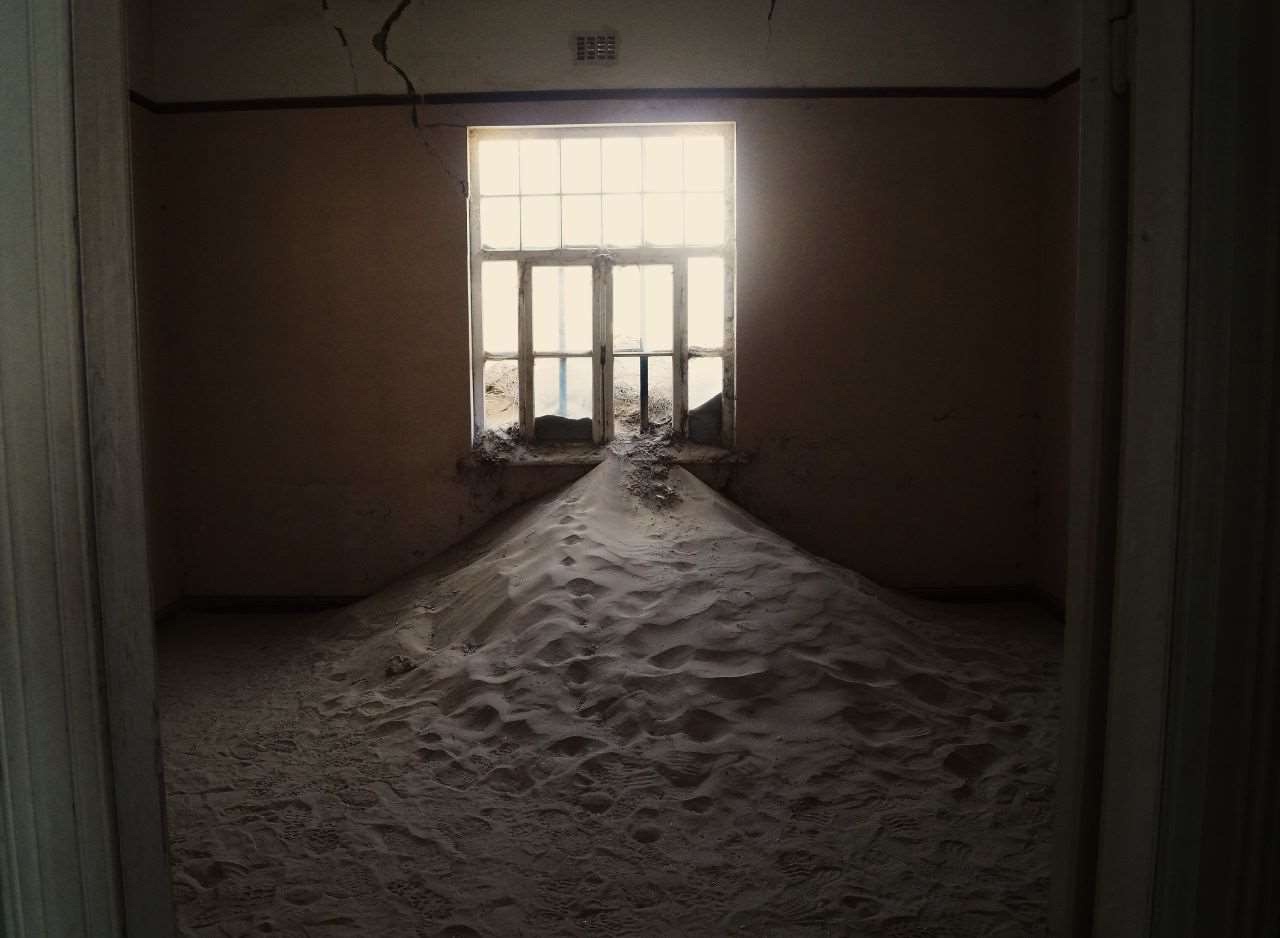
A battered window opens onto a pile of sand moved by the wind and old footprints, while an almost blinding light filters through a Phantasmal window.
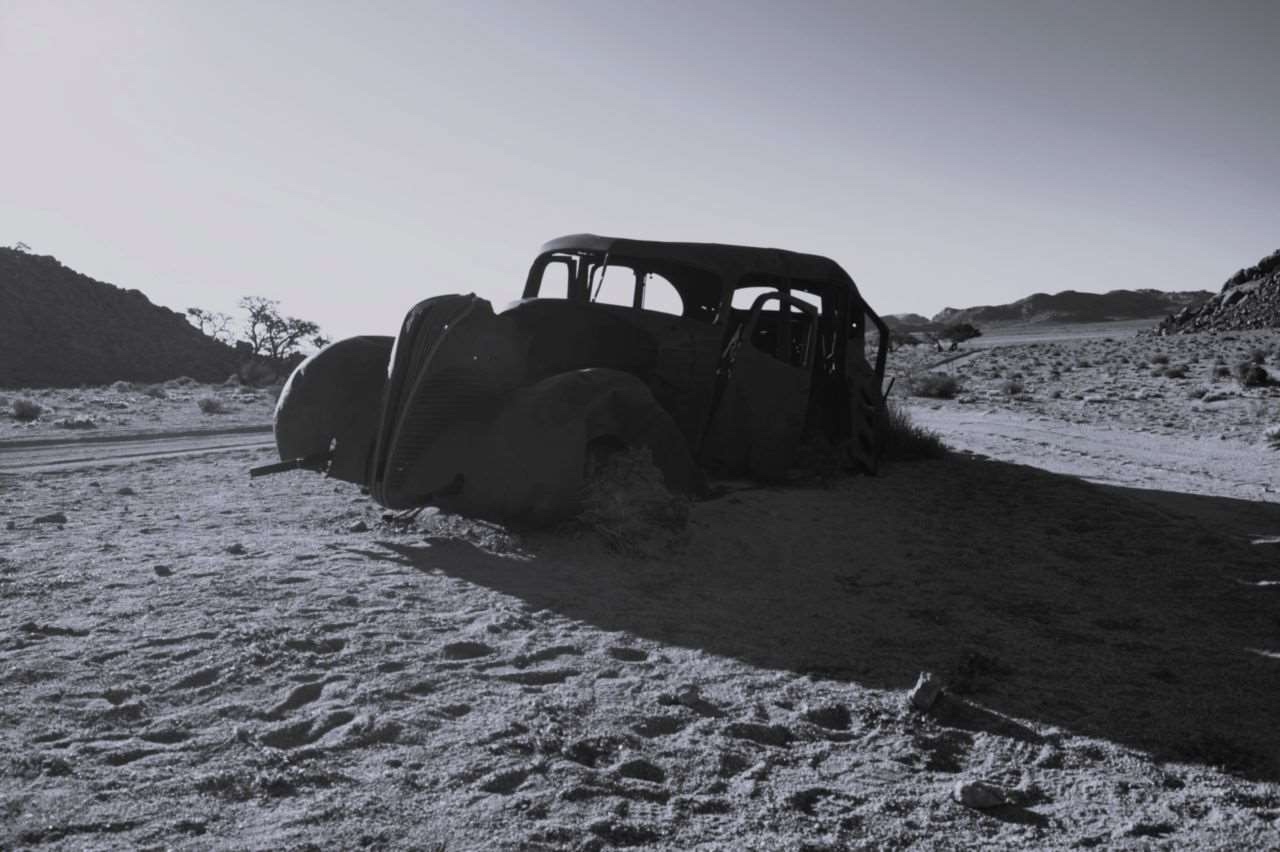
The thief’s car was taken at Klein-Aus Vista, located on the outskirts of Aus, Southern Namibia. The thief’s car has a curious history: In the 1950s, a thief was fleeing the area with loot, pursued by a police patrol, but was forced to abandon both the stolen goods and the car. The car remained there as a testament to the story. The photo shows a rusty vintage car and old ironwork that has fallen into disuse. The combination of the old car and the desert landscape imbues the image with a retro aura.
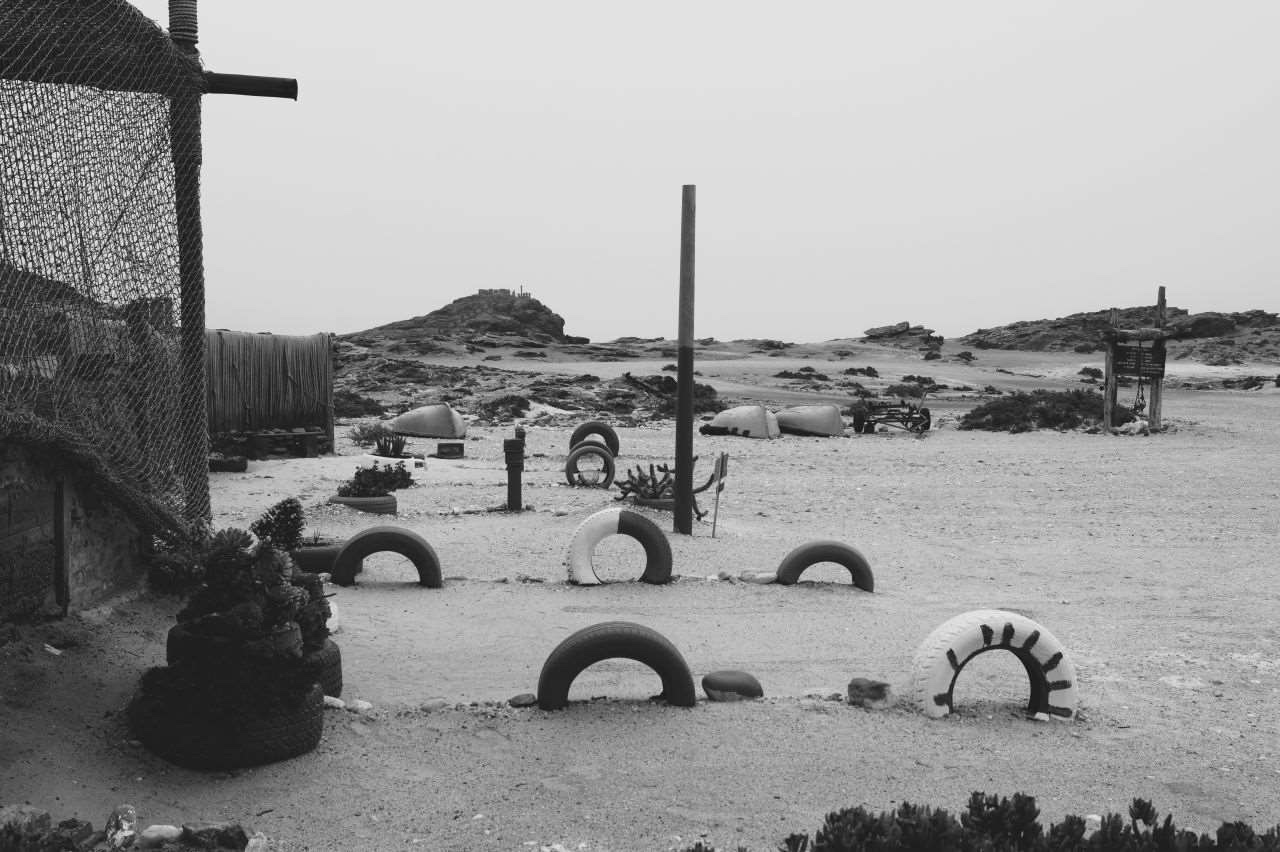
Car wheels along the coast illustrates a timeless seascape at dawn, dotted with sailors’ boats and weathered debris. Sperrgebiet National Park rises at the southernmost edge of the Namib Desert, along the Atlantic coast that overlooks the rocky spur where, in 1488, the Portuguese explorer Bartolomeus Diaz landed (a place known as Diaz Point). In the background, you can see the hill with the cross Diaz placed at the landing site.
The story behind the pictures
The allure of abandoned places is embodied in this collection of photographs taken at the ghost village of Kolmanskop, along the road that leads from the desert to the coastal town of Luderitz. Kolmanskop stands like a lighthouse in the fog inside the Tsau Khaeb National Park, also known as Sperrgebiet National Park. The park was established in 2004 and is part of a diamond mining area in the Namib Desert. Kolmanskop, which literally means “the head of Coleman,” is a reddish patch of land dotted with ancient buildings in Southern Namibia. The name of the town traces back to a carrier named Johnny Coleman who, during a sandstorm, abandoned his ox cart on a small hill in front of the settlement.
Kolmanskop wasn’t always abandoned. In 1908, worker Zacharias Lewala found a diamond while working in this area and showed it to his supervisor, the German railway inspector August Stauch. After learning that the area was rich in diamonds, many German miners settled there, and once the German government declared the large area Sperrgebiet (restricted area), they began to exploit the diamond fields.
Driven by the enormous wealth of the first diamond miners, the villagers built the city in German colonial style, equipping it with facilities, including a hospital, a ballroom, an electrical power station, a school, a theater, a casino, an ice production plant, and the first tram in Africa. A railway line to Luderitz, a port town just a few kilometers away, was also established. With the discovery of diamond deposits, a diamond rush began in German South West Africa (Deutsch-Südwestafrika). In 1915, during the First World War, South African forces invaded the country, taking control of the region. In the 1990s, the Namibian government purchased a 50 percent stake from the original owner of the mine, De Beers, forming a shared partnership called Namdeb Diamond Corporation. The city became depopulated after the First World War with the decline of diamond mining activity, and was finally abandoned in 1954.