Antuco
Poetry
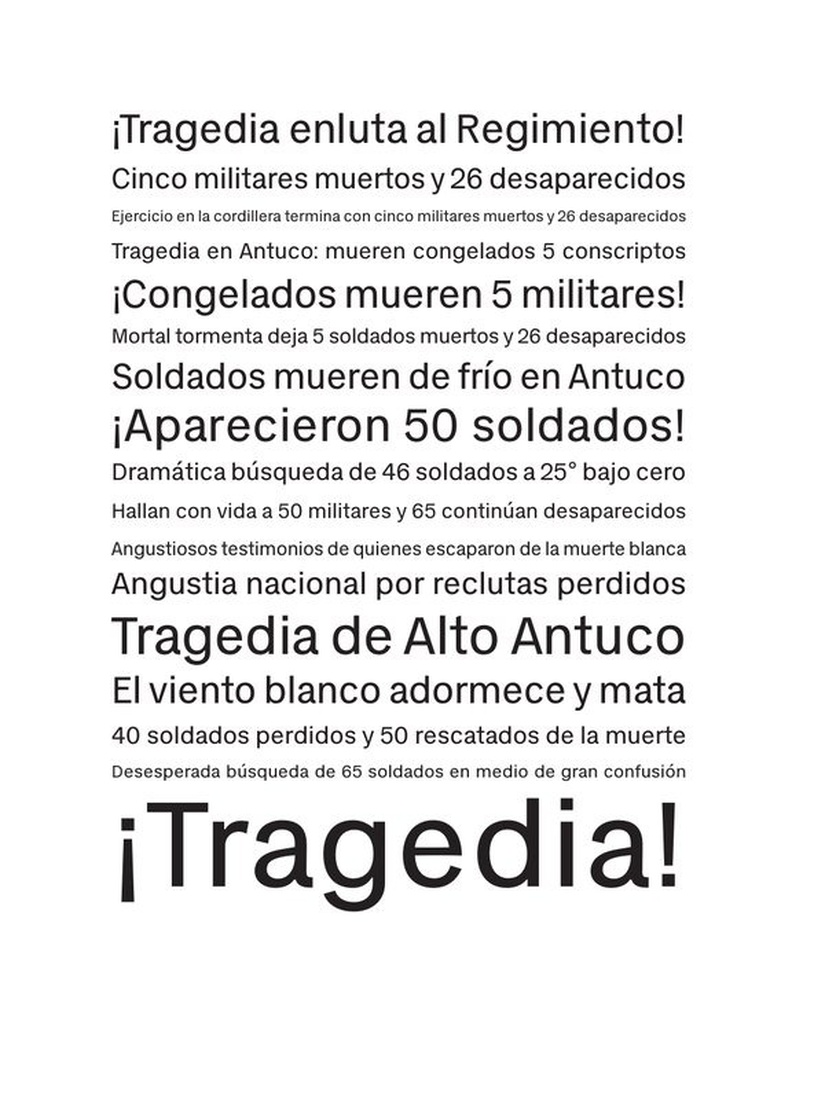
Antuco is a volcano located in the commune of the same name, in the Bío-Bío Region of Chile. It is also the name given to the Antuco tragedy, which occurred on May 18, 2005, on the volcano’s slopes, in which 44 conscripts and one non-commissioned officer died from hypothermia while marching 24 km in a snowstorm, following orders from their superiors. This event constitutes the second-largest disaster in the Chilean army during peacetime.
Limited rations before the march A lack of military training No opposition from the mountaineering instructors to proceeding with the march despite the weather Ignoring the weather report predicting a snowstorm in the cordillera Zero knowledge of the terrain on the part of the conscripts Non-provision of proper alpine gear to the soldiers Only commissioned officers adequately equipped for the march Some conscripts’ combat clothing soaked to the waist from an attempted crossing of El Volcán creek within a kilometer of the starting point. No order given to abort the march Soldiers lacking compasses, maps, watches or any other means of orientation Each conscript’s pack and gun weighing close to forty kilos. Weight increasing during the march as it is soaked by meltwater Snow covering the trail, leaving only faint marks from trucks and earlier marches The company’s radio, the sole means of communicating with the shelters, fails. It is impossible to call for help or to abort the Andino company’s march, which begins four hours after the Morteros company The tragedy is attributed to natural causes
0543 A headwind blows against the march Crashing straight on into the soldiers Those at the front of the line take a direct hit of upswept snow Those behind are not spared the blast The wind manages to hit them all equally There’s no place no range beyond its wrath
Every one of the marchers knows that he shouldn’t be here But no one turns back, they let themselves be swept on by the wind
Whiteout is described by alpine specialists as If one were inside of a car without a windshield in the middle of a rainstorm Like marching inside of a sandstorm The ground level wind lifts clouds of snow And smacks them at high speed against exposed parts Face and neck receive the filaments like needles Visibility remains reduced to between 30 and 50 centimeters The pain impedes their looking up, walking upright The snow is encrusted on their clothing worsening the hypothermia The soldiers walk hand in hand, encouraging each other They yell, insult, hit each other to make their way through the storm The conscripts who lag behind the column lose the way They continue on alone, walking blindly They are the last to be found
1000 Conscript soldier Hernández is the first to feel the effects of hypothermia Fatigue. Joint pain. Low blood pressure. Dehydration. Sleepiness He falls to the ground. He is revived and relieved of his rucksack He is transferred to a makeshift stretcher For a couple of kilometers in the middle of the storm
1135 Some of the Morteros sit in the snow awaiting help They know that the Andino company is on its way Even if they will be just as unprotected
After less than an hour of inactivity the ice begins to climb up their legs They begin to lose flexibility in their fingers They can’t feel their calves Their instep is stiff Each time it’s more difficult to flex their feet The flesh has hardened It is in the process of freezing To step is to hit the ground with an inert slab disassociated from the body
The legs are useless for the rest of the march
1145 The first encounter between the Morteros and Andino companies is a body tossed on the trail The Andinos think that it is a mannequin, a scarecrow in a combat uniform on the snow A joke among the officers to frighten them The second body doesn’t intimidate them either It’s hardly noticed amid the advance of the vanguard section Finally the fifth doll registers
It speaks
Through the chattering they understand the word help And just then the Andinos understand the situation They check the vital signs of the straggling Morteros They dig a foxhole where they can leave the troops to await a rescue Called in on a broken radio
The sound of the soft snow crunching under the boots The sound of the flakes accumulating into the vast density The sound of the whiteout and its eternal and omnipresent gusting The sound of the chattering of teeth The sound of the indecipherable babbling The sound of the falling, the caving, the collapsing, the sliding Then no sound Then, again, the wind
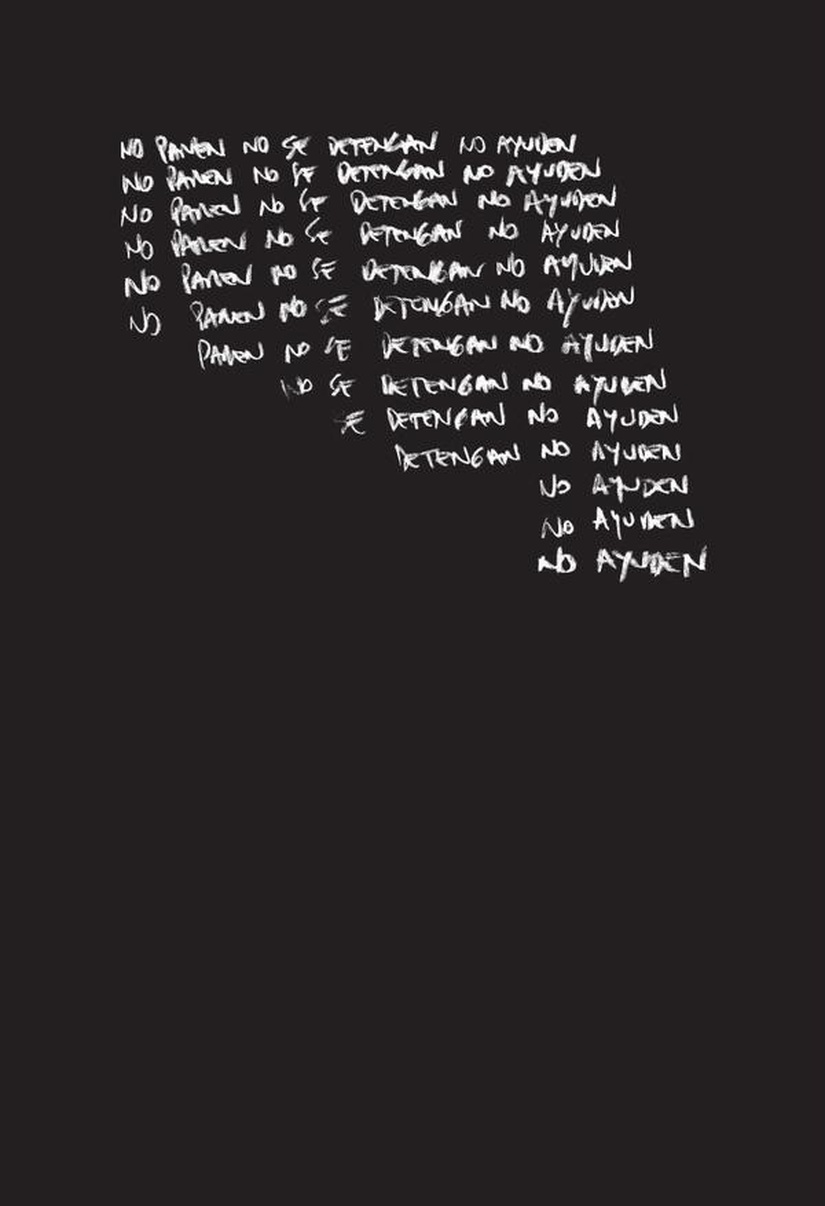
---- Those who try to help the fallen argue with the dying Leave me. Save yourself. Keep walking The final words of the soldier who doesn’t get up are true and reasonable Those that hear these words reject them at first Then they assent with a resigned silence And continue their march leaving behind the still-breathing man They know that the cold is an agony that touches everyone equally
Come back, come back No one’s died on me yet Come back, come back, come back
---- Despite the thirst and fatigue The pauses in the march must be nonexistent or brief Remaining inactive in the whiteout results in a rapid rise in hypothermia Two or three minutes is enough for numbness and deep sleep to kick in Making it impossible to have energy to return to the trail The fallen shrink into themselves, searching for heat in an unbearable fatigue The majority die in the fetal position
Fetal position – Elbows tucked – Face down – Laid in holes dug out by the same soldiers – Sitting gripping their weapons – Hugging themselves – Face up, hands across the chest
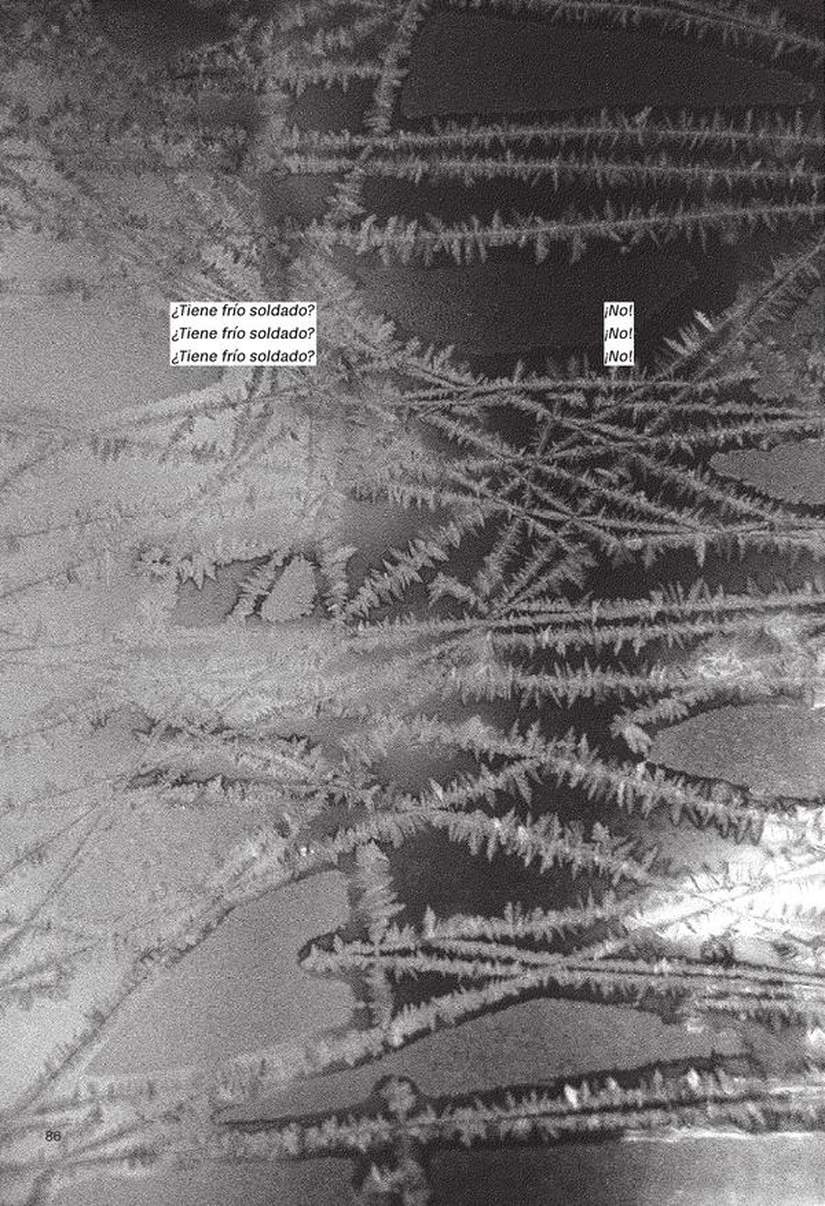
En route Andino finds the Morteros shelters Inside groups of two to five soldiers, the majority dead Offering them help is impossible or useless The trauma of the survivors lies in their own statements
I could have done something and I didn’t They asked me for water and I didn’t stop If I had stopped I also would have ended up freezing there It was me or him You couldn’t, the order was to keep going
---- After twenty kilometers of marching the Universidad de Concepción outpost appears Concrete walls without doors, windows or anything to keep the heat The conscripts have the order to destroy what little remains of it The guns are finally useful in breaking apart rafters and floorboards Burn everything. Burn it down, soldier These are orders from the officers while the conscripts strip Shedding their soaked clothes Rubbing themselves, slapping their legs together They dance naked before the fire until dawn
---- The march’s final kilometers are every man for himself For some of the officers there are no chains of command, responsibility for their subordinates They decouple themselves from the soldiers in their charge and form an elite troop A platoon of green berets with knowledge of logistics and mountaineering Equipped with combat gear tested to subzero temperatures Each conscript is cut adrift What remains of the company advances through the storm by their own means Some haul their comrades most affected by hypothermia behind them Others form small groups to support one another And lead on without knowing if they are on the right path Some go it alone as though this were a competition
None of these methods is without its losses
The colonel in charge of the regiment will say afterward The tragedy was a test where the strongest survived
I wanted to come here as president of Chile to say goodbye to these soldiers. Destiny had it that on a 21st of May like today another Chilean also passed on as a hero. Arturo Prat and his men died as war heroes. Today we say goodbye to these soldiers as heroes of peace
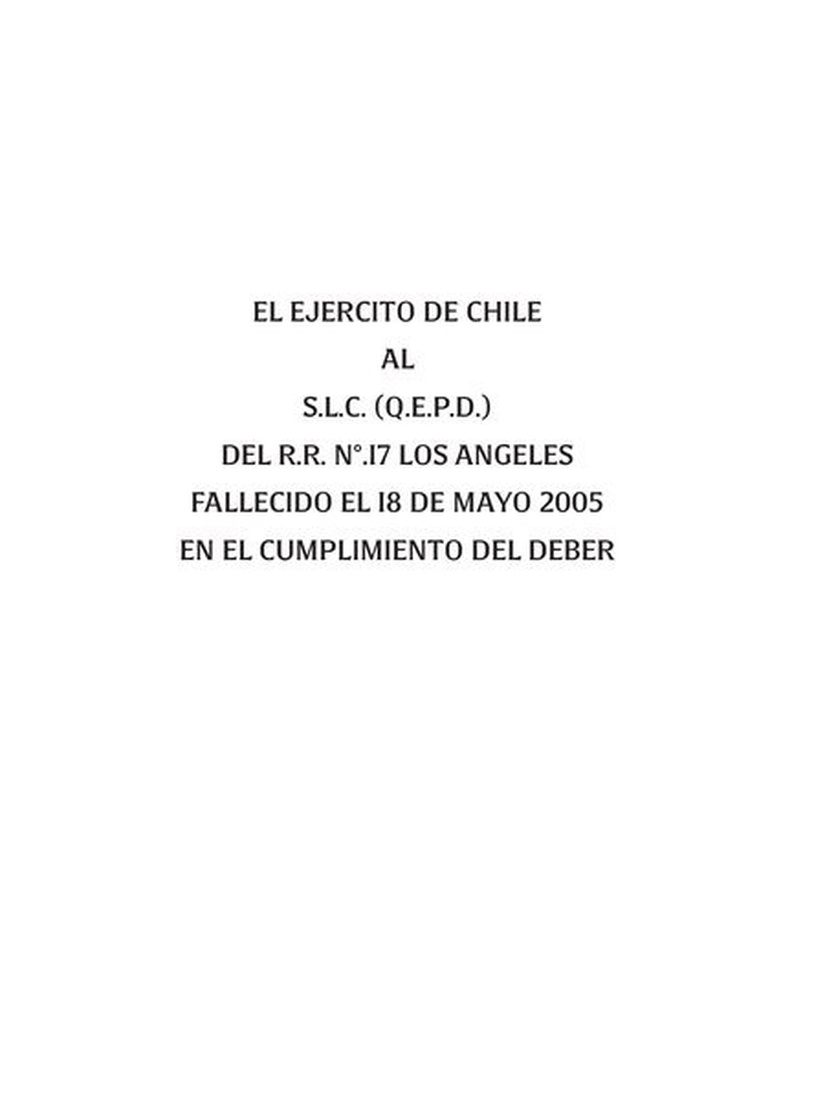
The first thirteen conscripts recovered receive a state funeral The President of the Republic, the Commander-in-Chief of the Army bestow honors They deliver a Chilean flag to each of the mothers of the deceased While the families of those who are still missing watch the scene The President of the Republic promises the mourners that justice will be served Let fall who may
Sanctions According to Army Internal Summary
Major Cereceda: Discharged Colonel Mercado: Discharged Lieutenant Colonel Pineda: Discharged Captain Gutiérrez: 3 days arrest and detention Captain Olivares: 5 days arrest and detention NCO Grandón: 7 days arrest and detention Second Sergeant Tolosa: 7 days arrest and detention Corporal Hernández: 10 days arrest and detention
For crimes of dereliction of military duties and the quasi-crime of homicide
5 years and a day 3 years with conditional release 541 days with conditional release Sentence reduced to 800 days Acquitted Acquitted Acquitted Acquitted
I raised the question, I said to him why did these soldiers, only soldiers, have to die and not a single NCO, not a single lieutenant and he told me that they weren’t prepared, that the kids don’t even know how to wash a spoon, he said, let alone polish shoes and we, he said, brought them out there to learn how to be men, that’s what he said. That’s why we brought them out there. And I said to him why do you go out there totally equipped and the soldiers not. And he stayed blank-faced and didn’t say anything back to me. And I said to him everyone here is at fault, not just one specific person. And he said no, it was nature
Lumbar injuries – Fluid in the knees – Mental lapses – Hallucinations – Beginnings of schizophrenia – Depression – Burns on the bottoms of feet and palms – Inability to exert force or lift weight – Personality disorders – Alcoholism – Muscular fatigue – Damaged joints – Suicide attempts – Post-traumatic stress
One third of the tragedy’s survivors remain in the Army’s ranks today
They weren’t heroes